
For parents
A Level Chemistry tutor UK: mechanisms, calculations and finding the right tutor (2026)
A Level Chemistry has the steepest GCSE-to-A-Level jump of any science. Mechanisms, calculations and mark scheme precision are all teachable, here's how to find a tutor.
Harry Wright, founder, TutorLab
9 min read
A Level Chemistry has a reputation as one of the hardest A Levels — and it's earned. The jump from GCSE Chemistry to A Level is steeper than in most subjects. Students who found GCSE straightforward routinely find Year 12 Chemistry genuinely demanding. Tutoring demand is high: Chemistry is required for Medicine, Pharmacy, Chemical Engineering and many Biochemistry degrees, meaning many students feel they have to get this right regardless of difficulty.
Why A Level Chemistry is difficult
- Mathematical content. A Level Chemistry is heavily mathematical — moles calculations, equilibrium constants, enthalpy cycles, rate equations. Students who are less confident with maths often struggle here in ways they didn't at GCSE.
- Mechanism drawing. Organic chemistry mechanisms (SN1/SN2, electrophilic addition, nucleophilic acyl substitution) require precise curly arrow drawing. There are no shortcuts — the arrows either show the correct electron pair movement or they don't.
- Conceptual depth. A Level Chemistry requires genuine understanding of why reactions happen — not just that they do. Equilibrium, bonding theory, electrode potentials and spectroscopy all require conceptual frameworks that tutors can build more effectively than textbooks alone.
- Volume. The specification is very large. Students who get behind in one module often find the next builds on it, and gaps compound quickly.
Looking for a Chemistry tutor?
Tell us what you need and up to 3 likely responders reply. No reply within 48 hours and we introduce you to more, automatically. Free, and no agency fees on top of their rate.
Get matched with a tutor, free
One short form. No reply within 48 hours and we introduce you to more, automatically.
One form → up to 3 likely responders. No account, no agency fees.
Prefer to browse first? See all Chemistry tutors
Chemistry tutors on TutorLab
Real, independent tutors on TutorLab. Message them directly, no agency fees.
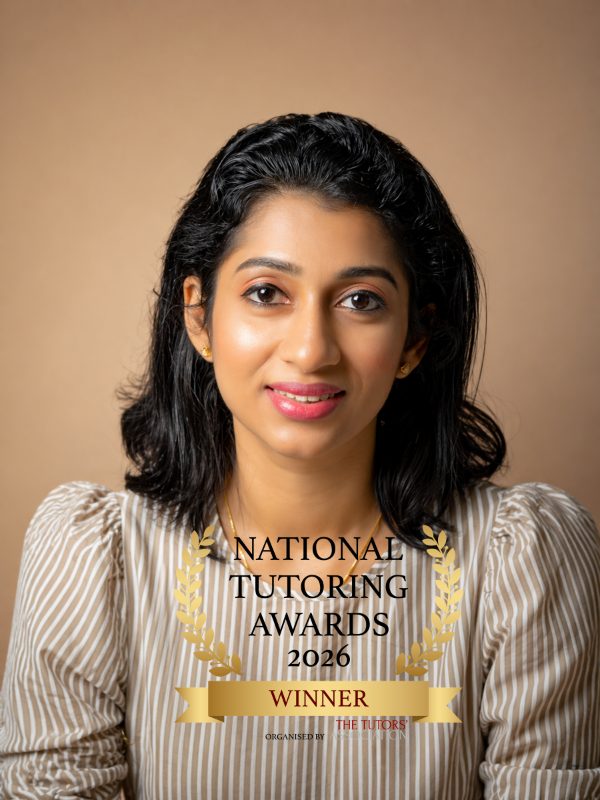
Rose Kurian
Empathalic Award Winning Chemistry Tutor for IB, A-Levels, GCSE/IGCSE, AP
No verified reviews yet
ChemistryA-Level ChemistryIBGCSEOnline
£80/hrAvailable
Rose Kurian, Chemistry tutor→
WM
waffa Mateeh
Chemistry Tutor for IB, A-Level, GCSE & IGCSE | Concept Clarity + Exam Success
No verified reviews yet
ChemistryGCSEA levelsOnline
Rate on enquiryAvailable
waffa Mateeh, Chemistry tutor→
Peach State Tutoring
Tutoring for SAT/ACT Prep and High School Subjects
No verified reviews yet
ChemistryPSATAPIBOnline
£65–£125/hrAvailable
Peach State Tutoring, Chemistry tutor→
AL
Alastair Leith
Founder OASA, Astrophysics diploma co-author
No verified reviews yet
ChemistryAstronomyGCSEA-LevelNorthampton
£25/hrAvailable
Alastair Leith, Chemistry tutor in Northampton→
PM
Pradeepan Mahendrarjah
GCSE & A-level Chemistry and Biology with 10+ years experience
No verified reviews yet
ChemistryBiologyGCSEA levelOnline
£50/hrAvailable
Pradeepan Mahendrarjah, Chemistry tutor→
ZH
Zainab Hanjra
STEM Tutor (Biology • Chemistry • Physics • Maths)
No verified reviews yet
ChemistryBiologyGCSEAlevelsOnline
£10/hrAvailable
Zainab Hanjra, Chemistry tutor→
What an A Level Chemistry tutor covers
- Calculation practice. Moles, concentrations, titrations, Kp, Kc, pH and electrode potential calculations all require systematic practice. A tutor who works through calculation types methodically and spots where errors occur builds confidence fast.
- Organic mechanisms. Teaching mechanism drawing accurately — the direction and target of each curly arrow — is one of the highest-value things a Chemistry tutor can do. This skill determines whether students lose 2–4 marks per mechanism question.
- Required practical understanding. Required practicals appear in written papers — students need to know why each practical is designed the way it is, what the variables are and what errors affect results.
- Past paper technique. A Level Chemistry mark schemes are specific. Good tutors teach students to write answers that earn marks, not just demonstrate understanding.
Exam board differences
AQA, OCR (A and B), Edexcel and WJEC all differ in their treatment of certain topics and in the balance between physical, inorganic and organic chemistry. OCR B (Salters) takes a context-led approach quite different from AQA. Tutors must know the specific specification to prepare students effectively.
Chemistry for Medicine and Pharmacy applicants
Medicine requires at least one science at A Level (typically Chemistry plus Biology). Pharmacy requires Chemistry. These students need strong grades and many seek tutoring alongside their current UCAT preparation. A tutor who understands the full application picture — not just the A Level content — is particularly helpful.
A Level Chemistry tutor costs
- A Level Chemistry: £40–£75/hour — Chemistry graduates and those with postgraduate science qualifications command the upper end
- Online A Level Chemistry tutoring: Usually £5–£10 less. Chemistry works well online — calculations, mechanism drawing and past paper analysis all function on digital whiteboards
Find an A Level Chemistry tutor
Browse Chemistry tutors on TutorLab. Confirm the tutor knows your child's exam board before booking — the specifications differ enough that this matters.
- Chemistry tutors in London
- Chemistry tutors in Manchester
- Chemistry tutors in Birmingham
- Online Chemistry tutors (UK-wide)
Frequently asked questions
Should my child start Chemistry tutoring in Year 12 or wait until Year 13?
Starting in Year 12 is generally better — Chemistry builds on itself, and gaps in Year 12 topics (particularly organic mechanisms and physical chemistry calculations) create problems in Year 13. Students who wait until Year 13 often spend the first few months covering Year 12 material they never fully understood.
My child struggles specifically with organic chemistry. Can a tutor help?
Yes — organic mechanisms are highly teachable. The reason students struggle is usually that they've memorised sequences rather than understood the electron movement that drives each step. A tutor who explains mechanisms from first principles (what electrons are attracted to and why) builds an understanding that works for any mechanism, not just memorised ones.
Are there tutors who cover both A Level Chemistry and Biology?
Some tutors cover both, particularly those with Biomedical Sciences or Natural Sciences backgrounds. If your child needs support in both, it's worth asking prospective Chemistry tutors whether they also offer Biology support — it can be more efficient than two separate tutors.
Can a Chemistry tutor help with GCSE Chemistry as well as A Level?
Most A Level Chemistry tutors can cover GCSE as well — the content is a subset of A Level. If your child needs support at GCSE, look for a tutor with A Level experience since they'll have a deeper understanding of the subject and can explain concepts more thoroughly.
Frequently asked questions
- Should my child start Chemistry tutoring in Year 12 or wait until Year 13?
- Starting in Year 12 is generally better — Chemistry builds on itself, and gaps in Year 12 topics (particularly organic mechanisms and physical chemistry calculations) create problems in Year 13. Students who wait until Year 13 often spend the first few months covering Year 12 material they never fully understood.
- My child struggles specifically with organic chemistry. Can a tutor help?
- Yes — organic mechanisms are highly teachable. The reason students struggle is usually that they have memorised sequences rather than understood the electron movement that drives each step. A tutor who explains mechanisms from first principles builds an understanding that works for any mechanism, not just memorised ones.
- Are there tutors who cover both A Level Chemistry and Biology?
- Some tutors cover both, particularly those with Biomedical Sciences or Natural Sciences backgrounds. If your child needs support in both, it is worth asking prospective Chemistry tutors whether they also offer Biology support — it can be more efficient than two separate tutors.
- Can a Chemistry tutor help with GCSE Chemistry as well as A Level?
- Most A Level Chemistry tutors can cover GCSE as well — the content is a subset of A Level. If your child needs support at GCSE, look for a tutor with A Level experience since they will have a deeper understanding of the subject and can explain concepts more thoroughly.
Find a Chemistry tutor for your child
Tell us what you need and we'll match you with independent UK tutors. No reply within 48 hours and we introduce you to more, automatically. Free, and no agency fees on top of their rate.
Get matched, freePrefer to browse first? See all Chemistry tutors