
For parents
Chemistry tutor UK: what to look for at GCSE and A Level (2026)
Chemistry is consistently one of the subjects families turn to tutors for. Here's what to look for, what the common weak spots are, and what it costs.
Harry Wright, founder, TutorLab
8 min read
Chemistry is consistently one of the subjects families turn to tutors for. It sits at an uncomfortable intersection: it's abstract enough that classroom teaching often doesn't land for every student, and the content is dense enough that falling behind is difficult to recover from without help. At A Level, it's also one of the most competitive subjects for university medicine, dentistry and pharmacy applications — where a grade B instead of an A can make a real difference.
Who benefits from a chemistry tutor?
Students at both GCSE and A Level, but for different reasons:
- GCSE: Chemistry at GCSE is often studied as part of combined Science (Double Award) or as separate sciences. Students doing triple science and aiming for a grade 7 or above are the most common GCSE chemistry tutoring clients. The mole calculations, organic chemistry and quantitative chemistry sections cause the most problems.
- A Level: This is where demand is highest. A Level Chemistry is genuinely difficult — mechanisms, thermodynamics and kinetics in particular require a level of abstract thinking that many students find hard. Students aiming for medicine often need a chemistry tutor even if they're high achievers.
Looking for a Chemistry tutor?
Tell us what you need and up to 3 likely responders reply. No reply within 48 hours and we introduce you to more, automatically. Free, and no agency fees on top of their rate.
Get matched with a tutor, free
One short form. No reply within 48 hours and we introduce you to more, automatically.
One form → up to 3 likely responders. No account, no agency fees.
Prefer to browse first? See all Chemistry tutors
Chemistry tutors on TutorLab
Real, independent tutors on TutorLab. Message them directly, no agency fees.
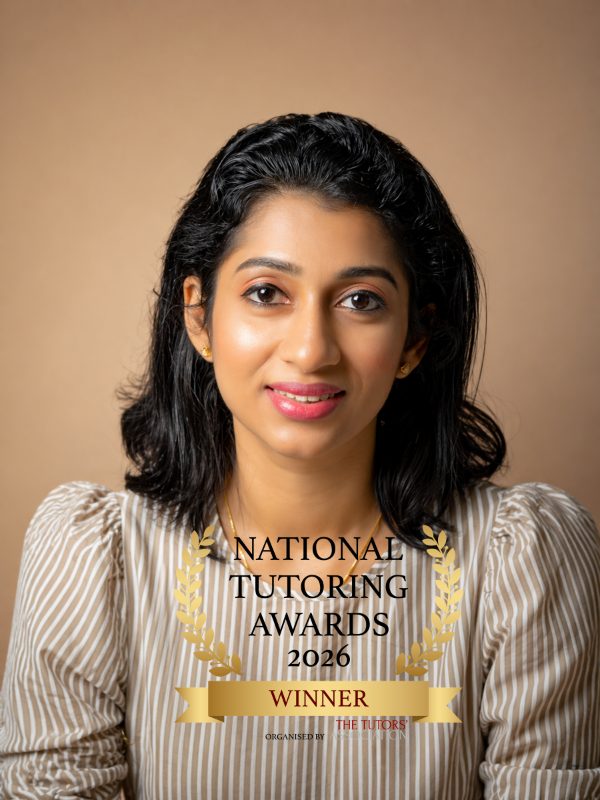
Rose Kurian
Empathalic Award Winning Chemistry Tutor for IB, A-Levels, GCSE/IGCSE, AP
No verified reviews yet
ChemistryA-Level ChemistryIBGCSEOnline
£80/hrAvailable
Rose Kurian, Chemistry tutor→
WM
waffa Mateeh
Chemistry Tutor for IB, A-Level, GCSE & IGCSE | Concept Clarity + Exam Success
No verified reviews yet
ChemistryGCSEA levelsOnline
Rate on enquiryAvailable
waffa Mateeh, Chemistry tutor→
Peach State Tutoring
Tutoring for SAT/ACT Prep and High School Subjects
No verified reviews yet
ChemistryPSATAPIBOnline
£65–£125/hrAvailable
Peach State Tutoring, Chemistry tutor→
AL
Alastair Leith
Founder OASA, Astrophysics diploma co-author
No verified reviews yet
ChemistryAstronomyGCSEA-LevelNorthampton
£25/hrAvailable
Alastair Leith, Chemistry tutor in Northampton→
PM
Pradeepan Mahendrarjah
GCSE & A-level Chemistry and Biology with 10+ years experience
No verified reviews yet
ChemistryBiologyGCSEA levelOnline
£50/hrAvailable
Pradeepan Mahendrarjah, Chemistry tutor→
ZH
Zainab Hanjra
STEM Tutor (Biology • Chemistry • Physics • Maths)
No verified reviews yet
ChemistryBiologyGCSEAlevelsOnline
£10/hrAvailable
Zainab Hanjra, Chemistry tutor→
What to look for in a chemistry tutor
- Chemistry degree or strong chemistry background. A Level chemistry in particular requires subject depth. A biology graduate with some chemistry knowledge is not the same as a chemistry graduate who has studied organic mechanisms in detail.
- Exam board knowledge. AQA, OCR A, OCR B (Salters), Edexcel and CIE (for international students) have different content and different question styles. The practicals and required experiments differ too. Ask which board your child is on.
- Practical knowledge. Required practicals appear in the written exams. A tutor who can explain how and why experiments are conducted — not just the theory — is more useful for A Level students.
The topics students most often need help with
At GCSE: mole calculations, electrolysis, organic chemistry (basic), rates of reaction.
At A Level: organic mechanisms (nucleophilic substitution, addition, elimination), equilibrium constants, entropy and Gibbs free energy, NMR spectroscopy, transition metal chemistry.
If a tutor can clearly explain these topics in plain terms at an initial consultation, that's a good sign they know the content well enough to teach it.
How much does a chemistry tutor cost?
- GCSE Chemistry: £30–£50/hour.
- A Level Chemistry: £40–£70/hour. Specialist A Level tutors with examining experience or postgraduate chemistry knowledge sit at the upper end.
- Online chemistry tutoring: Usually £5–£10 less per hour, and often gives access to better specialists. Molecular structures and equations work well on shared digital whiteboards.
How often should sessions run?
For GCSE students targeting a grade improvement, weekly sessions from January in Year 11 is a reasonable approach. For A Level students — especially those targeting medicine — weekly tutoring throughout Year 12 and 13 is common. Starting in Year 12 rather than panicking in Year 13 makes a significant difference.
Find a chemistry tutor
Browse chemistry tutors on TutorLab. All tutors list their rates, qualifications and exam board experience directly on their profile.
- Chemistry tutors in London
- Chemistry tutors in Manchester
- Chemistry tutors in Birmingham
- Chemistry tutors in Leeds
- Online chemistry tutors (UK-wide)
Browse by topic: organic chemistry · calculations and moles · physical chemistry
Chemistry has a GCSE grade 4+ pass rate of 77.7% nationally — see the full GCSE pass rates by subject for how all 22 subjects compare.
Frequently asked questions
Can a chemistry tutor help my child improve from a grade C to an A?
A two-grade jump is achievable at GCSE with targeted tutoring over a term. At A Level, moving from a C to an A requires more sustained work — typically a full year of regular sessions.
Is A Level Chemistry harder than Biology or Physics?
Most students find A Level Chemistry harder than Biology. Physics and Chemistry are similarly demanding, but in different ways — Chemistry has more content volume, Physics has more mathematical complexity. Which is "harder" depends on the student.
My child is applying for medicine. How important is their chemistry grade?
Very. Most medical schools require an A or A* at A Level Chemistry, and many specify grade requirements at GCSE too. Given how competitive medicine is, a chemistry tutor for medical applicants is often a worthwhile investment.
Should a chemistry tutor cover maths as well?
Not necessarily. The maths in A Level Chemistry (logarithms, rearranging equations) is manageable for most students with a good GCSE maths grade. If a student is genuinely weak at maths, a separate maths tutor may be more effective.
How do I know if a chemistry tutor is good at teaching, not just good at chemistry?
Ask them to explain a concept you know your child finds difficult. A good tutor explains clearly and checks understanding — they don't just recite the correct answer.
Related reading
Find a Chemistry tutor for your child
Tell us what you need and we'll match you with independent UK tutors. No reply within 48 hours and we introduce you to more, automatically. Free, and no agency fees on top of their rate.
Get matched, freePrefer to browse first? See all Chemistry tutors