
For parents
Physics tutor UK 2026: GCSE and A Level guide
Physics is the most mathematical of the three sciences and the one where students most often struggle to connect the maths to physical meaning. Here's what to look for in a tutor.
Harry Wright, founder, TutorLab
9 min read
TutorLab physics tutors charge £35–£60/hour for GCSE Physics and £45–£75/hour for A-Level Physics. Browse verified physics tutors across the UK and contact them directly — no agency fees, no commission. Find a physics tutor near you or explore physics tutors in London, Manchester and Birmingham.
Physics is the most mathematically demanding of the three sciences. At GCSE it's already equation-heavy; at A Level it requires confident simultaneous use of maths and physical reasoning in a way that many students find genuinely hard. When students struggle with physics, it's usually one of two problems: weak underlying maths, or difficulty linking mathematical processes to physical meaning. A good physics tutor addresses both.
When is a physics tutor worth it?
- Maths is fine but physics still doesn't click. This is very common. A student can rearrange equations perfectly but not understand why force times distance equals work. Physics tutoring bridges the gap between mechanics and meaning.
- Targeting grade 7+ at GCSE or A/A* at A Level. The top grades in physics require genuine understanding, not just formula memorisation. Tutoring is very effective at building this.
- Engineering or physics university applications. Many engineering courses want A Level Physics at A or A*. Competition for places at top universities is high enough that a tutor makes a real difference.
Looking for a Physics tutor?
Tell us what you need and up to 3 likely responders reply. No reply within 48 hours and we introduce you to more, automatically. Free, and no agency fees on top of their rate.
Get matched with a tutor, free
One short form. No reply within 48 hours and we introduce you to more, automatically.
One form → up to 3 likely responders. No account, no agency fees.
Prefer to browse first? See all Physics tutors
Physics tutors on TutorLab
Real, independent tutors on TutorLab. Message them directly, no agency fees.
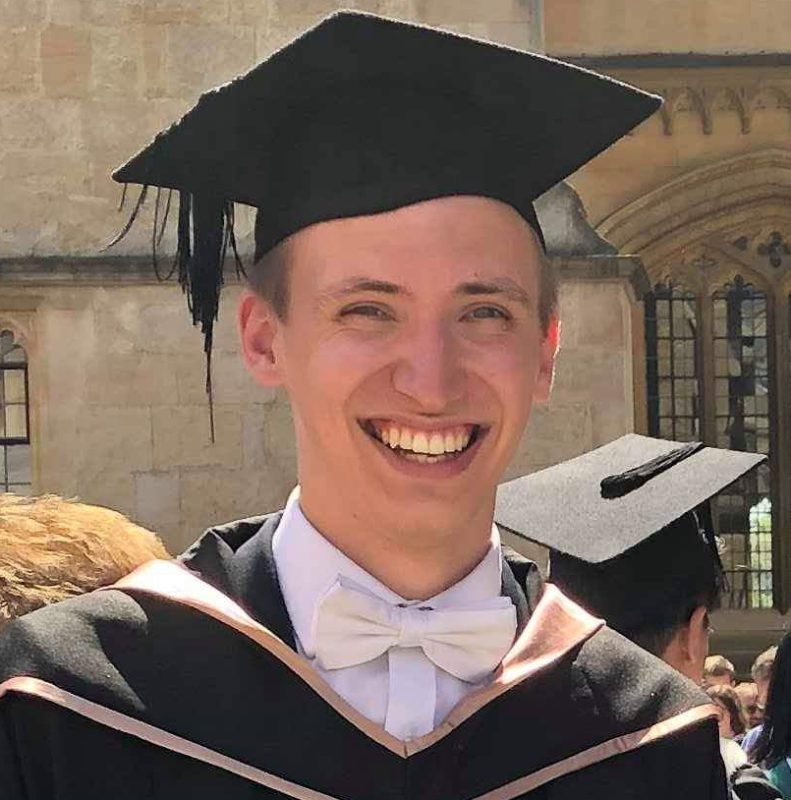
Daniel Bingham
GCSE and A level Maths, Further Maths and Physics tutor
No verified reviews yet
PhysicsMathsGCSEA levelOnline
£50/hrAvailable
Daniel Bingham, Physics tutor→

Er. Gyan
Leading Media ( NBC, abc, Bloomberg US, USA TODAY & 507+) Acclaimed Teacher of Perfect Scorer SAT n Ivy League Students gone to Stanford, Yale, Cornell
No verified reviews yet
PhysicsMathsSAT Maths & Up to Grades 11 &12 any board- PhysicsOnline
Rate on enquiryAvailable
Er. Gyan, Physics tutor→
Peach State Tutoring
Tutoring for SAT/ACT Prep and High School Subjects
No verified reviews yet
PhysicsPSATAPIBOnline
£65–£125/hrAvailable
Peach State Tutoring, Physics tutor→
CH
Christopher Hack
Oxford-based Physics, Maths and Computing tutor
No verified reviews yet
PhysicsMathsGCSEA-LevelOxfordshire
£90–£180/hrAvailable
Christopher Hack, Physics tutor in Oxfordshire→
ZH
Zainab Hanjra
STEM Tutor (Biology • Chemistry • Physics • Maths)
No verified reviews yet
PhysicsBiologyGCSEAlevelsOnline
£10/hrAvailable
Zainab Hanjra, Physics tutor→
F
Faizan
GCSE O Level, A Level Maths Tutor - 5 Years of Experience
No verified reviews yet
PhysicsMathsGCSE A LevelAll GradesOnline
£10–£15/hrAvailable
Faizan, Physics tutor→
What to look for in a physics tutor
- Physics or engineering degree. Physics A Level goes into enough depth that a non-physicist tutor struggles with the hardest questions. Check qualifications.
- Strong maths teaching ability. The best physics tutors can teach the maths within the physics context — they don't assume students already know how to apply simultaneous equations to circuit problems or calculus to motion.
- Exam board knowledge. AQA, OCR A, OCR B and Edexcel A Level Physics have different required practicals and slightly different content emphasis. Ask which board your child is on before booking.
Topics students find hardest
At GCSE: electricity (particularly circuits with multiple components), forces and motion (especially the equation triangle questions), waves and electromagnetic spectrum.
At A Level: quantum mechanics (photoelectric effect, electron diffraction), electromagnetic induction, circular motion, gravitational and electric fields, and anything requiring calculus-based reasoning (even where the spec doesn't formally require calculus, the thinking needed is similar).
AQA, Edexcel and OCR Physics specifications
The three main A Level Physics specifications are AQA, Edexcel and OCR A. They cover broadly similar content but differ in required practicals, question style and some topic emphasis:
- AQA Physics — the most widely taken. Twelve required practicals are assessed via written questions in Paper 3. Strong emphasis on mathematical skills throughout.
- Edexcel Physics (Pearson) — includes the Core Practical assessments and an additional paper covering either astrophysics, nuclear and particle physics or medical physics. Tends to be slightly more formulaic in question style.
- OCR A Physics — has a Practical Endorsement (PAG) running throughout the course. Paper 3 includes a synoptic section requiring connections across all topics. Often considered more conceptually demanding.
At GCSE, AQA and Edexcel dominate. Make sure a prospective tutor knows your child's specific specification — the required practicals, topic coverage and command word conventions differ.
Topics GCSE Physics students find hardest
Forces, energy, waves, electricity, magnetism, and space physics make up the core GCSE syllabus. The topics most students find hardest:
- Electricity — circuits with multiple components, series vs parallel, resistance calculations
- Forces and motion — the equation triangle questions, velocity-time graphs, Newton's laws in context
- Waves and electromagnetic spectrum — frequency, wavelength, wave speed, refraction
- Magnetism and electromagnetism — Fleming's left-hand rule, motors and generators
Physics tutor costs in the UK
- GCSE Physics: £35–£60/hour
- A Level Physics: £45–£75/hour — physics/engineering graduates and those with postgraduate experience at the upper end
- Online: Typically £5–£10/hour less. Physics works well online — equations, diagrams and problem-solving translate well to shared digital whiteboards.
Find a physics tutor
Browse physics tutors on TutorLab. All tutors display their own rates and qualifications — contact them directly, no agency fees.
- Physics tutors in London
- Physics tutors in Manchester
- Physics tutors in Cambridge
- Physics tutors in Oxford
- Online physics tutors (UK-wide)
Browse by topic: forces and motion · electricity · waves · atomic and nuclear
Physics has one of the lower GCSE grade 4+ pass rates — see our GCSE pass rates by subject for the full national picture across 22 subjects.
Frequently asked questions
How much does a physics tutor cost?
GCSE physics tutors typically charge £35–£60/hour. A Level physics tutors charge £45–£75/hour, with physics and engineering graduates commanding the higher end. Online tutors are usually £5–£10/hour less than in-person.
What topics do GCSE physics tutors cover?
The core GCSE physics topics are forces, energy, waves, electricity, magnetism and space physics. Most students need targeted help with electricity (circuit problems), forces and motion (equation triangles, velocity-time graphs) and the electromagnetic spectrum. A good tutor will quickly identify which topics are weakest and prioritise those.
Should I get an online or in-person physics tutor?
Both work well. Online physics tutoring is particularly effective because equations, diagrams and problem-solving all translate well to a shared digital whiteboard. The main advantage of online is access to a wider pool of qualified tutors — particularly physics and engineering graduates who may not be local. Most TutorLab physics tutors offer online sessions. Browse online physics tutors here.
Does my child need a maths tutor as well as a physics tutor?
Not necessarily — many physics tutors cover the relevant maths within sessions. But if a student has significant maths gaps, a separate maths tutor may be more efficient.
How hard is A Level Physics compared to GCSE?
Significantly harder. A Level Physics is one of the most challenging sixth-form subjects. Students who find GCSE Physics straightforward often underestimate the step up and struggle in Year 12 without additional support.
Can online physics tutoring cover practical questions?
Yes. Required practical questions in written papers are about understanding what was done and why, not performing the experiment. These are very manageable to cover in online sessions.
My child is good at maths but struggling with physics. Why?
Physics requires applying maths in context, which is a different skill from solving equations in isolation. Many mathematically able students need explicit help connecting the two. This is one of the most common and most fixable problems a physics tutor deals with.
What grade does my child need at GCSE Physics for A Level?
Most sixth forms require a grade 6 or above in Physics (or combined Science) to take A Level Physics. Aiming for a 7 gives more options and a stronger foundation for the A Level course.
Find a Physics tutor for your child
Tell us what you need and we'll match you with independent UK tutors. No reply within 48 hours and we introduce you to more, automatically. Free, and no agency fees on top of their rate.
Get matched, freePrefer to browse first? See all Physics tutors